Showing posts with label registration. Show all posts

Wednesday, 19 April 2017

Venturefest Oxford Registration Open


Jane Lambert

Venturefests are described as
"local innovation eco-systems [coming] together through a number of local events around the country, working closely with Innovate UK, the Knowledge Transfer Network and other national partners to strengthen connectivity between these innovators, investors and entrepreneurs" (see What is Venturefest?)
There are now Venturefests throughout the country but the very first took place in Oxford in 1999.

The next Venturefest Oxford will take place at The King's Centre, Osney Mead, Oxford OX2 OES on 21 June 2017 and early bird registration is now open There is an interesting programme of speakers including a presentation by Philip Webber of Dehns on Your IP post-Brexit: What effect will leaving the EU have on your IP? in the Vale Room between 15:00 and 15:45. The theme of this year's Venturefest Oxford will be The Challenges of a Business: From Start-Up to Scale-Up which is included by popular request from last year. Discussions on this topic will run from 09:30 - 11:30 in the Vale Room. All the other usual events such as Innovation Showcase and Pitching for Success will be there plus an exhibition with stands from the city's two universities, the local enterprise partnership, the Intellectual Property Office and several patent and trade mark agencies.

I plan to attend Venturefest Oxford and if anyone would like to meet me there please give me a call on 020 7404 5252 or send me a message through my contact form.

Thursday, 23 October 2014

The Furniture Industry and IP

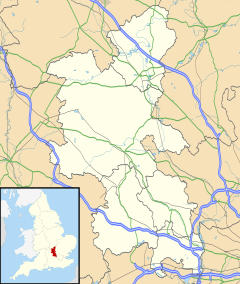
High Wycombe


This is the first of a series of articles about the communities and industries of South East England and how IP relates to them.  This post focuses on High Wycombe and its neighbourhood which is best known for furniture making.   According to the Wycombe District Council website, furniture has been manufactured in the district since the 17th century. Despite competition from other parts of the UK and abroad furniture making in Wycombe is still going strong.

Legal Protection
The reason for the industry's success is its reputation for quality and design.  That reputation results from considerable investment in technology, product design and marketing for which the industry requires robust legal protection.  Investment in new technology is protected by patents which may be granted by the Intellectual Property Office ("IPO") in Newport or the European Patent Office ("EPO") in Munich. New designs may be protected by registration with the IPO as registered designs or the Office for Harmonization in the Internal Market ("OHIM") in Alicante as registered Community designs ("RCD"). Brands are protected by the registration of distinctive signs as "registered trade marks" with the IPO or as "Community trade marks" ("CTM") with OHIM.  Copyright is also important to the furniture industry as the artwork for fabrics and other surface decoration are artistic works and some items of furniture may be works of artistic craftsmanship.

Patents
A patent is the monopoly of a new invention. It confers the exclusive right to make, sell, import or use the invention.  An invention may be a product or a process.  Patents may be granted for the United Kingdom by the IPO or the EPO. It is not yet possible to get a patent for the whole European Union but it is already possible to apply to the EPO for patents (known as "European patents") for the same invention in up to 38 European countries and it should soon be possible to apply to the EPO for a European patent for (which will be known as a "unitary patent") for the territories of most of the countries of the EU including the UK.

Designs
There are at least 6 ways of protecting designs in the United Kingdom:
  • new designs having individual character may be registered with the IPO for the UK alone as registered designs under the Registered Designs Act 1949;
  • new designs having individual character can be registered with OHIM for the whole EU as RCD under the Community design regulation;
  • designs that could have been registered with the IPO as registered designs or registered with OHIM as RCD are protected from copying throughout the EU as unregistered Community designs ("UCD") by virtue of the Community design regulation;
  • original designs of aspects of shape or configuration of 3-dimensional articles are protected within the UK from copying by unregistered design right pursuant to Part III of the Copyright Designs and Patents Act 1988 ("CDPA");
  • the artwork for fabrics, floor and wall coverings and other surface decoration is protected from copying in the UK by copyright pursuant to Part I of the CDPA; and
  • works of artistic craftsmanship within the meaning of s.4 (1) (c) of the CDPA which might include some items of furniture are protected in the UK as original artistic works by Part 1 of that Act.
Registration of a design as a registered design or RCD confers the exclusive right to use the design and "use" for this purpose means "making, offering, putting on the market, importing, exporting or using of a product in which the design is incorporated or to which it is applied, or stocking such a product for those purposes." Designs may be registered as registered designs or RCDs for an initial term of 5 years which can be renewed for further 5 year terms up to a maximum of 25 years. Registration of a design with the IPO confers that monopoly for the UK alone. Registration with OHIM confers that monopoly throughout the EU including the UK. UCD subsists in a new design for 3 years from the date upon which the design was first made available to the public in the EU. Unregistered design right subsists for a total of 15 years unless articles made to the design are offered for sale or hire within the first 5 years of that term in which case design right subsists for 10 years from the end of the year in which such articles were first made available to the public. In the last 5 years of the term anyone in the world can apply to the design right owner for a licence to make articles to the design as of right. If the terms of such licence cannot be agreed they are determined by a hearing officer appointed by the the CEO or Comptroller of the IPO.

Copyright
Artistic copyright subsists for the life of the person who created the design plus 70 years. However, s.52 of the CDPA limits the term of the copyright of any artistic work that was or could have been registered as a registered design or RCD to 25 years. S.52 has been repealed by s.74 (2) of the Enterprise and Regulatory Reform Act 2013 following the decision of the Court of Justice of the European Union in Case C168/09 Flos SpA v Semeraro Casa e Famiglia SpA [2011] ECDR 8, [2011] RPC 10, [2011] EUECJ C-168/09. The repeal has not yet taken effect and the government is consulting on when the repeal should take effect (see Jane Lambert "Flos putting us all through the Mill" 17 Oct 2014).

Trade Marks
A trade mark is a sign that can be represented graphically which is capable of distinguishing goods or services of one undertaking from those of others. Examples include words (including personal names), designs, letters, numerals or the shape of goods or their packaging. Signs are registered in relation to specified goods or services. Registration of a sign with the IPO as a registered trade mark confers the exclusive right to use that mark in the UK relation to the goods or services for which the mark is registered. Registration with OHIM confers the exclusive right to use that mark in relation to such goods or services throughout the EU. "Use" includes labelling, advertising and point of sale marketing.

Enforcement
The rights mentioned above may be enforced by civil proceedings of the courts of the country where an infringement is threatened or takes place.  Remedies include injunctions (orders of the court to do or refrain from doing specified acts punishable by fine or imprisonment if disobeyed), damages (compensation for loss or damage resulting from the infringement) or an account of profits (surrender of benefits of infringement) and costs. In England and Wales claims up to £500,000 may be brought in the Intellectual Property Enterprise Court ("IPEC") where trials are limited to 2 days and recoverable costs capped at £50,000. IPEC has a small claims track for trade mark and copyright claims up to £10,000 where recoverable costs are limited to a few hundred pounds. All other claims should be brought in the Chancery Division of the High Court. Patent and registered and RCD claims over are reserved to a special tribunal of the Chancery Division known as the Patents Court. Claims relating to the new unitary patent and eventually all European patents will be determined by a new Unified Patent Court consisting of a Court of First Instance and a Court of Appeal. The Court of First Instance will be based in Paris with a section in London and other chambers throughout the EU.

Criminal Proceedings
Piracy (copyright infringement on an industrial scale) and counterfeiting (trade mark infringement on an industrial scale) are offences in the UK and most other industrial countries. Since the 1 Oct 2014 intentional copying of a registered design or RCD has also been an offence in the UK. Prosecutions are brought by local authority trading standards officers or privately. It is not an offence to infringe a patent, unregistered design right or other intellectual property right in the UK.

Further Information
From time to time we hold workshops and publish guidance on issues that affect particular industries. Issues that we have identified as of particular interest to the furniture industry in High Wycombe and the rest of the UK are the unitary patent, the repeal of s.52 and the new offence of intentional copying. If there is sufficient interest we shall hold seminars in the town in conjunction with local patent and trade mark attorneys and solicitors. In the meantime, if anyone wants to discuss those issues or IP law in relation to furniture manufacturing and distribution generally he or she should call me on 020 7404 5252 or message me through my contact form.

Wednesday, 9 October 2013

Introduction to Trade Marks

Trade marks everywhere! But how to get one?    Photo Wikipedia


Jane Lambert

In "What is IP? Why do Folk want it? How do they get it? How to learn more?"  20 Aug 2013 I explained that
  • IP (intellectual property) is the umbrella term for the bundle of laws that protect investment in intellectual assets,
  • intellectual assets are things such as brands, design and technology that give one business a competitive advantage over other, 
  • some IP rights ("IPR") such as copyrights and related rights and the right to bring a claim for passing off arise automatically while others such as registered trade marks have to be applied for.
Here I discuss trade marks, whether it is necessary to register a trade mark, where to register a trade mark, legislation, whether you need professional representation, costs, enforcement, revocation and invalidation and make some suggestions for further reading.

What is a Trade Mark?

The definition in s 1 (1) of the Trade Marks Act 1994 is "any sign capable of being represented graphically which is capable of distinguishing goods or services of one undertaking from those of other undertakings."

Gobbledegook! 

Even for lawyers. 

Last Friday the highest court in England and Wales handed down judgment in two appeals on what constitutes a "sign" and what is meant by "capable of being represented graphically". One of them concerned chocolate so I analysed it for my patent attorney and specialist clients in "The Colour Purple - Société Des Produits Nestlé S.A. v Cadbury UK Ltd." 4 Oct NIPC Law.

Basically a "sign" can be more or less anything that can be seen or sensed and the Trade Marks Act 1994  gives a few examples: "words (including personal names), designs, letters, numerals or the shape of goods or their packaging."  

The words "capable of being represented graphically" mean that it must be possible to describe the trade mark in words, numbers or some other way. The case I mentioned discussed that point.

"Undertaking" is a high faluting Eurocrat term for a business or enterprise. Not necessarily to do with funerals though undertakers do have trade marks just like any other business. Last year I advised in a trade mark dispute between two firms of funeral directors.

The words "capable of distinguishing goods or services" are important. The sign must identify the goods or services of a business.  It can't do that if the mark is or could be used by everybody in the trade.   For example, "Bread" won't do for a bakery because all bakers bake bread but maybe the image of a loaf coupled with the baker's name might. Unless of course the baker is called Mr. Baker.  Also, a trade mark can't exist in a vacuum.  It must relate to the goods and services of a business.

So in everyday language a trade mark means any name, logo or other sign that can be described in writing which identifies a business's goods or services in the market place.

Registration

Trade marks may be registered or unregistered.

If a mark is registered the owner of the registered mark has the exclusive right to use the mark for the goods or services for which it is registered. "Use" for that purpose includes placing the mark on goods or their packaging and advertising, importing or exporting goods or services under the mark.

A mark that is unregistered may still be protected in the United Kingdom by the law of passing off.  That is a judge made law that forbids traders from leading the public to believe that their goods or services as those of another trader by, for example, using the same or similar trade mark or style of packaging.  In many other legal systems there is a similar doctrine known as the law of "unfair competition".

Why bother to register a Trade Mark if it can be protected by the Law of Passing off?

There are two important advantages of registration.

The first is that it is a lot cheaper and easier to prove trade mark infringement than passing off.  In an action  for passing off a claimant has to prove that his or her trade mark is recognized in the market place which is usually done by producing sales figures, advertising and marketing expenditure and samples of advertising which can be expensive and time consuming to assemble.  Then he or she has to show that the defendant has misled or mislead the public by the use of the same or similar trade mark or in some other way. If the defendant disputes that the public has been misled the claimant may have to call witnesses who have been misled or even commission market surveys.  Finally, the claimant has to show that he or she has suffered loss or damage as a result of the defendant's activity such as loss of sales.  In an action for trade mark infringement the claimant has only to point to his or her registration and produce evidence of the defendant's use of the same or similar mark.

The second important advantage of registration is that the exclusive right is backdated to his or her application. The owner of a registered mark who is known as "the registered proprietor" does not have to prove that he or she has started to use the mark in the first 5 years after that application whereas in an action for passing off the owner does for he or she cannot otherwise prove that he or she is known in the market.

Registration of a trade mark does not affect the right to bring a claim for passing off.  The two rights are different though there is a lot of overlap. There are circumstances where it is possible for a claim for passing off to succeed and a claim for trade mark infringement to fail and vice versa.   Often a claim for trade mark infringement and passing off are brought in the same action.

Where to register a Trade Mark

If you want a trade mark for the UK alone you should apply to the Intellectual Property Office ("IPO") in Newport.

If you want to register a mark for the whole European Union including the UK you should apply to OHIM (Office of Harmonization in the Internal Market (Trade Marks and Designs)) in Alicante.

If you need a trade mark for any other country you should apply to the intellectual property office for the country or group of countries concerned.  The World Intellectual Property Organization (the UN agency for intellectual property) publishes a directory of intellectual property offices.  If you want to apply for trade marks in several countries at the same time the British government is party to an international agreement known as the Madrid Protocol that allows you to do so.

Applicable Laws

The basic legislation for the UK is the Trade Marks Act 1994 which has been amended several times.  The IPO publishes a useful unofficial consolidation of the latest version of the Act.  The Act is implemented by The Trade Mark Rules 2008.

In order to create a level playing field for businesses throughout the EU the national governments and European Parliament have adopted Directive 2008/95/EC known as the Trade Marks Directive which requires all national trade mark laws to be substantially the same.  Our Act and Rules have to comply with that directive.

Trade marks granted by OHIM are known as Community trade marks ("CTMs") and the legislation providing for CTMs is called the Community trade mark or CTM regulation (Regulation (EC) 207/2009). The basic provisions of the CTM regulation are very similar to the Trade Marks Directive.

Professional Representation

It is not compulsory to instruct a professional representative to apply for a trade mark and many business people have registered trade marks without any difficulty.  Applications in the UK and many other countries can be made on-line and the IPO, OHIM, WIPO and national intellectual property offices provides lots of useful information.

However, I would nevertheless strongly advise business owners and managers to consider seeking professional advice.   Their priority is to launch or manage their businesses and the time they spend on looking up the law, making searches and drafting and filing an application has to be taken into account. Trade mark attorneys have spent many years studying and practising trade mark law and know it inside out. They can make searches, form judgments as to what signs will or will not be accepted for registration and draft specifications and file them in a fraction of the time that it would take most businessmen or women to do the same and attirneys are much more likely to be right first time. They are also regulated by the Intellectual Property Regulation Board ("IPReg") and are insured against professional negligence.   The few hundred pounds that a trade mark attorney would charge for such work is likely to be money well spent.

The professional body for trade mark attorneys (who are also called "trade mark agents") is The Institute of Trade Mark Attorneys ("ITMA").  ITMA has a searchable database of trade mark attorneys with their websites and contact details.  Also, we have worked with many trade mark agents throughout the UK over many years and if you want a recommendation our clerks will gladly give you 2 or 3 names of firms who have done a good job in the past.  Call them on 020 7404 5252 during normal office hours or use their contact form.

How much will it cost?

If you make your own application on-line for a range of goods or services in the same class in the UK the IPO will charge you £170.

Goods and services are grouped in classes according to a treaty known as the Nice Agreement. If you want to register your mark for goods and services in more than one class the IPO will charge you £50 for each additional class.

To those basic filing fees you must add attorneys' or other professionals' fees or your own time for carrying out searches, drafting specifications and filing the application.   It is worth shopping around but it should be possible to find an attorney who is prepared to do all those things including on-line filing for around £500 plus VAT.

If the IPO or a third party objects to, or opposes, your application you may have to argue your case before an official known as "a hearing officer". An unsuccessful party made be ordered to pay some costs to the successful party but these are usually a fraction of the amount the successful party will have incurred in presenting a case to the hearing officer.  These costs could amount to several or even tens of thousands of pounds depending on the nature of the case and the representation. There is also the possibility of an appeal to the court or an independent lawyer known as "the Appointed Person."

If your application is successful and you are granted a trade mark you may have to sue infringers in the Chancery Division or a county court which could cost you tens or even hundreds of thousands of pounds. Unless you have, or your business has, plenty of resources you should consider taking out insurance against the cost of suing third parties and indeed the cost of third parties suing you for revocation or invalidation of your mark.

There are of course different costs for searches of, applications to, and proceedings in OHIM and foreign intellectual property offices. Information about those costs can be obtained from their websites or from your trade mark attorney.

Enforcement

You must sue for infringement of a British or Community trade mark in the High Court or in a county court that is attached to a chancery district registry.  As there are no chancery district registries in South East England your nearest court is the High Court of Justice in London.

If you claim is relatively straightforward, you seek damages limited to £500,000 and the case can be disposed of at a trial lasting no more than 2 days you can bring your claim in the Intellectual Property Enterprise Court ("IPEC").  On 1 Oct 2013 IPEC replaced a specialist jurisdiction of the Central London County Court known as the Patents County Court and has inherited most of its rules and practice.   If you sue in IPEC you will usually be allowed to recover more than £50,000 in costs from the other side if you win but, by the same token, they cannot recover more than £50,000 from you.

The IPEC also has a small claims track for injunctions and claims for up to £10,000 where recoverable costs (and the risk of adverse costs) are limited to a few hundred pounds.  I have written a lot of articles and given a presentation on the small claims track which are listed in "Patents County Court - the New Small Claims Track Rules" 20 Sep 2012 NIPC Law.  I shall also give a talk on the small claims track to ITMA over the internet on 12 Nov 2013 between 12:00 and 13:00.

If your claim falls outside IPEC's jurisdiction you have to sue in the Chancery Division.  There your liability for costs and that of the other side is unlimited.

As trade mark law is not straightforward be use to instruct litigators and counsel with expertise in IP law.   Though there are plenty of other good law firms with knowledge and experience of IP you are assured of such expertise if you instruct solicitors who are members of the Intellectual Property Lawyers Association. There are also a number of patent and trade mark attorneys who are accredited to conduct litigation in the High Court.

Similarly, if you instruct counsel or a solicitor or a patent or trade mark attorney advocate make sure that he or she has the necessary expertise.  Most barristers specializing in IP law are members of the Intellectual Property Bar Association.

If you try to enforce your rights without a specialist lawyer you could find yourself in serious trouble. For instance, s.21 of the Trade Marks Act 1994 provides a right of action against persons who threaten others with trade mark infringement proceedings without justification. Anybody making such threats can be sued for declarations, injunctions, damages and costs which can amount to many thousands of pounds.

Revocation and Invalidation

You should be aware that your trade mark can be taken away from you after it has been granted for a number of reasons.  For example, it may be revoked if you never use it or suspend your use for up to 5 years for no good reason. You could also lose it if becomes the common name in the trade for a product or service for which it is registered.  It may be that a judge or the IPO decides that you should never have been granted the trade mark in the first place in which case the court or IPO will invalidate your registration.

Applications for revocation or invalidation of a registered trade mark may be made to the IPO or court. You should not be surprised if a defendant to an infringement action counterclaims against you for revocation or invalidation of your registration.

"Trade Marks" or "Trademarks"

"Trademark" is the American spelling and "trade mark" is the spelling used in the UK, EU and much of the Commonwealth.  However, nobody in the UK will complain too much if you use the US spelling here.

Further Information

I gave a presentation on the law of branding which covered trade mark law and passing off on 25 Sept 2013. You can download myt slides and notes which provide links and make suggestions for further reading from Slideshare.

This article plus my presentation will be a foundation for further talks and articles on different aspects of trade mark law.

If you have any questions about this article or trade mark law generally, call me on 020 7404 5252 during office hours or use my contact form.