
 |
| High Wycombe
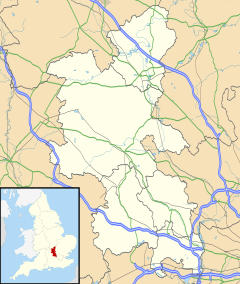
Map Wikipedia
|
This is the first of a series of articles about the communities and industries of South East England and how IP relates to them. This post focuses on High Wycombe and its neighbourhood which is best known for furniture making. According to the Wycombe District Council website, furniture has been manufactured in the district since the 17th century. Despite competition from other parts of the UK and abroad furniture making in Wycombe is still going strong.
Legal Protection
The reason for the industry's success is its reputation for quality and design. That reputation results from considerable investment in technology, product design and marketing for which the industry requires robust legal protection. Investment in new technology is protected by patents which may be granted by the Intellectual Property Office ("IPO") in Newport or the European Patent Office ("EPO") in Munich. New designs may be protected by registration with the IPO as registered designs or the Office for Harmonization in the Internal Market ("OHIM") in Alicante as registered Community designs ("RCD"). Brands are protected by the registration of distinctive signs as "registered trade marks" with the IPO or as "Community trade marks" ("CTM") with OHIM. Copyright is also important to the furniture industry as the artwork for fabrics and other surface decoration are artistic works and some items of furniture may be works of artistic craftsmanship.
Patents
A patent is the monopoly of a new invention. It confers the exclusive right to make, sell, import or use the invention. An invention may be a product or a process. Patents may be granted for the United Kingdom by the IPO or the EPO. It is not yet possible to get a patent for the whole European Union but it is already possible to apply to the EPO for patents (known as "European patents") for the same invention in up to 38 European countries and it should soon be possible to apply to the EPO for a European patent for (which will be known as a "unitary patent") for the territories of most of the countries of the EU including the UK.
Designs
There are at least 6 ways of protecting designs in the United Kingdom:
- new designs having individual character may be registered with the IPO for the UK alone as registered designs under the Registered Designs Act 1949;
- new designs having individual character can be registered with OHIM for the whole EU as RCD under the Community design regulation;
- designs that could have been registered with the IPO as registered designs or registered with OHIM as RCD are protected from copying throughout the EU as unregistered Community designs ("UCD") by virtue of the Community design regulation;
- original designs of aspects of shape or configuration of 3-dimensional articles are protected within the UK from copying by unregistered design right pursuant to Part III of the Copyright Designs and Patents Act 1988 ("CDPA");
- the artwork for fabrics, floor and wall coverings and other surface decoration is protected from copying in the UK by copyright pursuant to Part I of the CDPA; and
- works of artistic craftsmanship within the meaning of s.4 (1) (c) of the CDPA which might include some items of furniture are protected in the UK as original artistic works by Part 1 of that Act.
Registration of a design as a registered design or RCD confers the exclusive right to use the design and "use" for this purpose means "making, offering, putting on the market, importing, exporting or using of a product in which the design is incorporated or to which it is applied, or stocking such a product for those purposes." Designs may be registered as registered designs or RCDs for an initial term of 5 years which can be renewed for further 5 year terms up to a maximum of 25 years. Registration of a design with the IPO confers that monopoly for the UK alone. Registration with OHIM confers that monopoly throughout the EU including the UK. UCD subsists in a new design for 3 years from the date upon which the design was first made available to the public in the EU. Unregistered design right subsists for a total of 15 years unless articles made to the design are offered for sale or hire within the first 5 years of that term in which case design right subsists for 10 years from the end of the year in which such articles were first made available to the public. In the last 5 years of the term anyone in the world can apply to the design right owner for a licence to make articles to the design as of right. If the terms of such licence cannot be agreed they are determined by a hearing officer appointed by the the CEO or Comptroller of the IPO.
Artistic copyright subsists for the life of the person who created the design plus 70 years. However, s.52 of the CDPA limits the term of the copyright of any artistic work that was or could have been registered as a registered design or RCD to 25 years. S.52 has been repealed by s.74 (2) of the Enterprise and Regulatory Reform Act 2013 following the decision of the Court of Justice of the European Union in Case C168/09 Flos SpA v Semeraro Casa e Famiglia SpA [2011] ECDR 8, [2011] RPC 10, [2011] EUECJ C-168/09. The repeal has not yet taken effect and the government is consulting on when the repeal should take effect (see Jane Lambert "Flos putting us all through the Mill" 17 Oct 2014).
Trade Marks
A trade mark is a sign that can be represented graphically which is capable of distinguishing goods or services of one undertaking from those of others. Examples include words (including personal names), designs, letters, numerals or the shape of goods or their packaging. Signs are registered in relation to specified goods or services. Registration of a sign with the IPO as a registered trade mark confers the exclusive right to use that mark in the UK relation to the goods or services for which the mark is registered. Registration with OHIM confers the exclusive right to use that mark in relation to such goods or services throughout the EU. "Use" includes labelling, advertising and point of sale marketing.
Enforcement
The rights mentioned above may be enforced by civil proceedings of the courts of the country where an infringement is threatened or takes place. Remedies include injunctions (orders of the court to do or refrain from doing specified acts punishable by fine or imprisonment if disobeyed), damages (compensation for loss or damage resulting from the infringement) or an account of profits (surrender of benefits of infringement) and costs. In England and Wales claims up to £500,000 may be brought in the Intellectual Property Enterprise Court ("IPEC") where trials are limited to 2 days and recoverable costs capped at £50,000. IPEC has a small claims track for trade mark and copyright claims up to £10,000 where recoverable costs are limited to a few hundred pounds. All other claims should be brought in the Chancery Division of the High Court. Patent and registered and RCD claims over are reserved to a special tribunal of the Chancery Division known as the Patents Court. Claims relating to the new unitary patent and eventually all European patents will be determined by a new Unified Patent Court consisting of a Court of First Instance and a Court of Appeal. The Court of First Instance will be based in Paris with a section in London and other chambers throughout the EU.
Criminal Proceedings
Piracy (copyright infringement on an industrial scale) and counterfeiting (trade mark infringement on an industrial scale) are offences in the UK and most other industrial countries. Since the 1 Oct 2014 intentional copying of a registered design or RCD has also been an offence in the UK. Prosecutions are brought by local authority trading standards officers or privately. It is not an offence to infringe a patent, unregistered design right or other intellectual property right in the UK.
Further Information
From time to time we hold workshops and publish guidance on issues that affect particular industries. Issues that we have identified as of particular interest to the furniture industry in High Wycombe and the rest of the UK are the unitary patent, the repeal of s.52 and the new offence of intentional copying. If there is sufficient interest we shall hold seminars in the town in conjunction with local patent and trade mark attorneys and solicitors. In the meantime, if anyone wants to discuss those issues or IP law in relation to furniture manufacturing and distribution generally he or she should call me on 020 7404 5252 or message me through my contact form.

